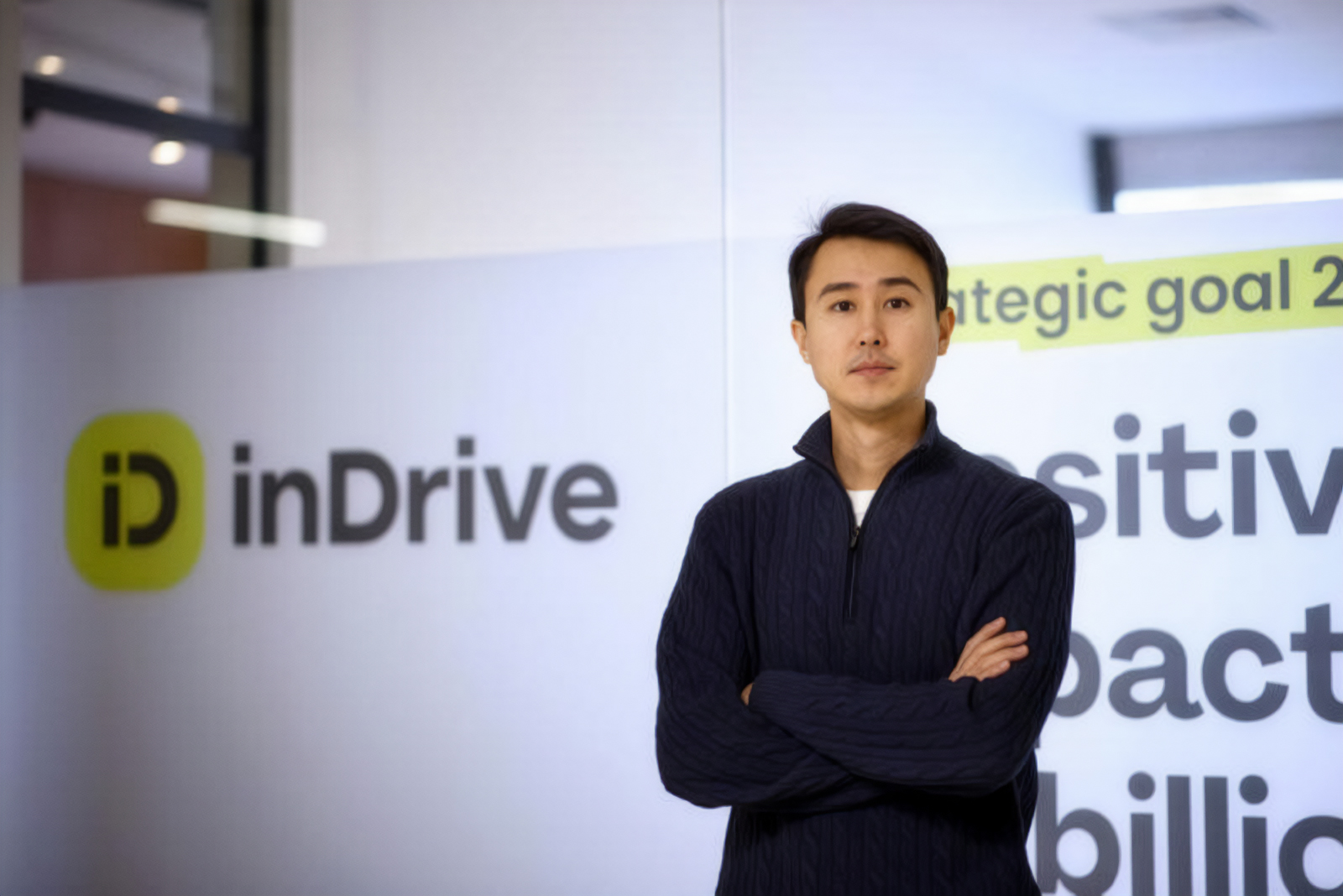

How inDrive built a ride-hailing model around negotiation, not algorithms
Platform-based services are now playing a growing role in employment, payments and urban mobility in Kazakhstan. Ride apps, in particular, have become a key part of daily life, shaped by the country’s size, dispersed population and a regulatory framework that has recently moved to formalise the business model. One of the most prominent players in this shift is inDrive, which operates on a negotiation-based model rather than algorithmic pricing. In this exclusive interview, Aray Bekembayev, country manager of inDrive in Kazakhstan, discusses the company’s growth, its competitive positioning and how technology firms are engaging with the country’s evolving digital and regulatory landscape.
Q: How did inDrive begin, and what defines its global model today?
Aray Bekembayev: The idea behind inDrive originated during a harsh winter in Yakutsk, the coldest capital in the world. Arsen Tomsky noticed a social media group created to help people travel between Yakutsk and nearby villages. In this group, founded by Sasha Pavlov, people coordinated rides from point A to point B and negotiated prices directly.
The core purpose of inDrive emerged from this situation: to fight injustice. Around 2012, ride prices during New Year’s Eve spiked dramatically, sometimes increasing tenfold. Arsen discovered the group in a social network, saw how people were negotiating fares and recognised a powerful insight: when a community faces a problem that no one else solves, it creates its own solution. The group grew to over 50,000 members, a significant share of Yakutsk’s population of about 330,000.
The story of inDrive is rooted in fairness and community driven problem solving. This foundation helped inDrive grow into a global ride-hailing company.
Q: How would you describe your current market position?
AB: Today, we operate in 48 countries and nearly 1,000 cities. Our most recent launch was Saudi Arabia, becoming our 49th country. Globally, we rank second after Uber and fifth among the most downloaded travel apps. The app has been downloaded more than 360 million times.
We achieved unicorn status in 2021. At that time, we had about 500 employees and operated in roughly 28–30 countries. As of early November 2025, we surpassed 7 billion deals completed in the app, and our growth continues.
Q: How did your own career path lead you to inDrive and to leading the Kazakhstan market?
AB: I worked for nearly four years as an Ernst & Young (EY) advisory consultant before receiving my first offer to join a tech startup. That was in 2019, and the offer was from Bolt, not inDrive. In 2020, when the pandemic began, inDrive became the only operational ride-hailing app in Kazakhstan.
My journey with inDrive began in 2022. During the pandemic lockdown, my contract with Bolt had ended, and their operations in Kazakhstan were suspended. I sent Arsen a message explaining my background and experience, and he replied within 20 minutes: “Sure, let’s talk.”
Q: Why has Kazakhstan become such a central market for inDrive?
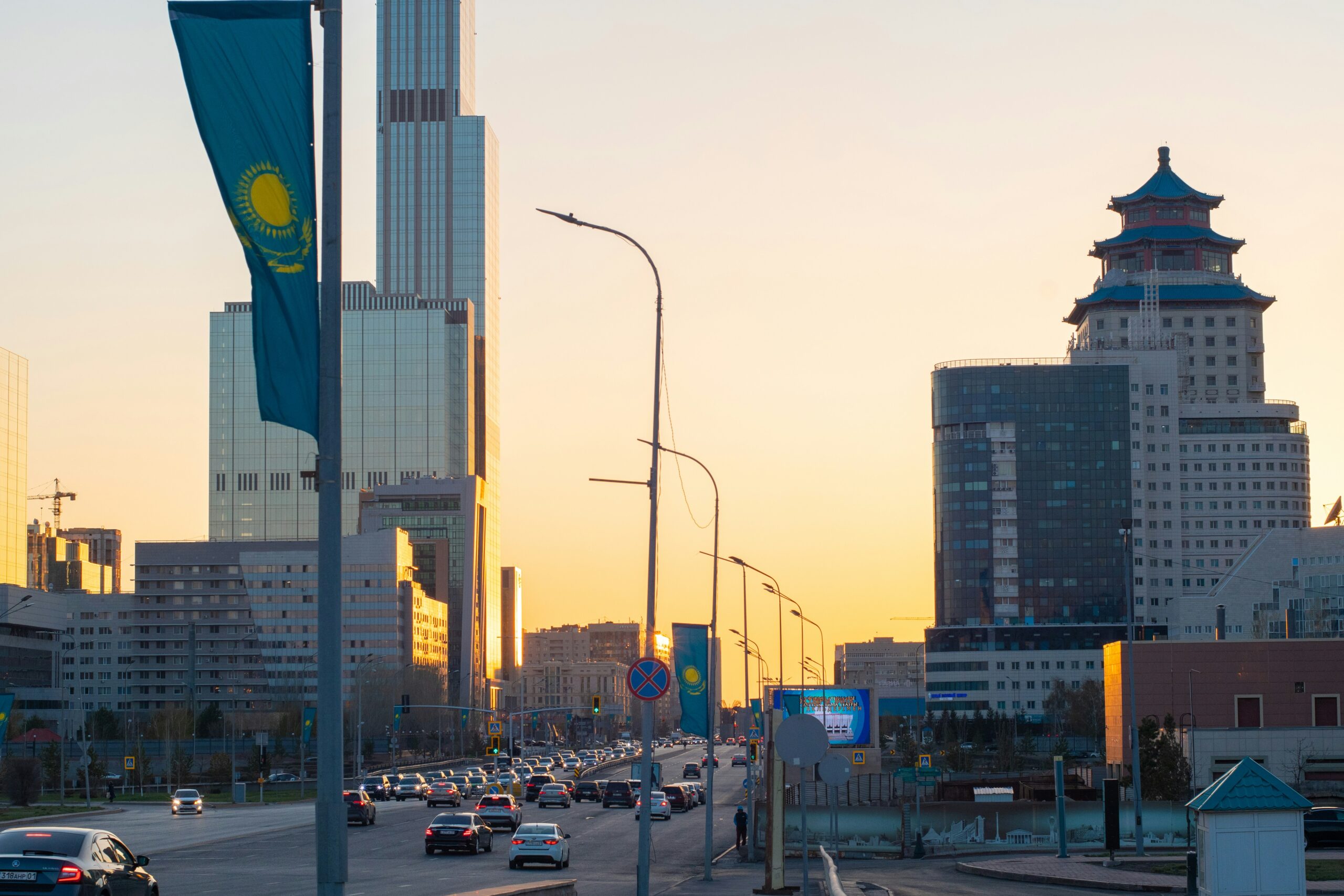
AB: Kazakhstan’s size played a major role in our growth. It has more than 1,500 internal routes connecting cities and small villages. In December 2014, Astana became inDrive’s first international launch city.
Transparency is central to why the model worked. People use inDrive not only to travel from point A to point B, but also to earn income. Anyone with a car can generate additional earnings. We do not adjust algorithms or set prices; users choose their own prices, routes and terms.
Drivers see the full route upfront, from pickup to destination. This level of transparency gives drivers complete freedom before accepting a ride, which is a key reason for high loyalty and retention in Kazakhstan.
Q: How does inDrive compete with algorithm-based platforms such as Yandex?
AB: In Kazakhstan, the two main competitors are Yandex and inDrive, but the models differ significantly. Yandex uses algorithms to set prices and assign drivers, while inDrive operates as an open market where users negotiate directly.
Freedom of choice is one of our core principles and a key factor in scaling internationally. Markets that value this freedom, including many in Asia, the Middle East and Latin America, respond especially well to our model. We are the largest player in Kazakhstan in terms of brand awareness.
Q: What operational or technical challenges are you currently addressing?
AB: One of our biggest bottlenecks has been managing extremely high traffic. Each passenger request can be exposed to ten or more drivers, creating a one-to-many negotiation pipeline based on game theory.
To address this, we carried out a major infrastructure overhaul, migrating from a monolithic architecture to microservices between 2023 and 2024. That bottleneck has now been resolved, and our focus is shifting towards service quality.
Safety is also a top priority. We have introduced anti-harassment programmes and other social impact initiatives, with more than nine projects active across about 17 countries.
Q: What new features are being rolled out in Kazakhstan?
AB: We are actively exploring the introduction of card payments. Kazakhstan has more than 80% card-payment penetration, but entering the transaction flow requires fundamental changes, including managing fraud and settlements.
We are developing a hybrid model combining acquiring with peer-to peer transfers, which are already widely used. About 80% of payments will remain P2P, with 20% done through acquiring. We expect to introduce this model in the first quarter.
We are also embedding internal navigation directly into the inDrive app using local mapping data, allowing drivers to complete trips without switching between multiple applications.
Q: How is inDrive integrating AI into its operations?
AB: I was surprised by how much machine learning was already in use when I joined in 2020. We were using computer vision to verify identities and read car plate numbers by 2021–22.
With large language models, we can now analyse much larger datasets. Employees use tools such as ChatGPT and Gemini for meeting notes, summaries and internal notifications. AI is used widely across the company.
Q: How does inDrive engage with Kazakhstan’s digital transformation agenda?
AB: We are closely involved with the ecosystem around Astana Hub, even though we declined tax residency because, as a unicorn, we believe we should pay taxes locally. We still maintain our office there and actively participate in events and mentoring.
We also work with government ministries on issues such as labour, safety and AI ethics. For example, we provide anonymised datasets to the Ministry of Transport to support road-safety improvements.
The introduction of platform-employment legislation was a major milestone. It created a legal framework for drivers and couriers, enabling platforms to act as tax agents and giving workers access to healthcare, pensions and loans.
Q: How do you assess Kazakhstan’s business environment today?
AB: Since 2016, the environment has changed dramatically. Collaboration with the government is now constructive, open and free of hidden interests or personal agendas. Kazakhstan is becoming increasingly friendly to tech companies and there is visible momentum around AI, education and entrepreneurship. We expect to see new unicorns from Kazakhstan in the coming years.
Q: How do social impact and commercial growth fit together at inDrive?
AB: If inDrive fights injustice in mobility, inVision addresses injustice in other areas, sports, education, culture and IT, by providing fair and transparent support mechanisms. We charge a relatively low commission and reinvest what exceeds operational needs into social projects. This philosophy creates strong loyalty among employees and communities. By 2030, we hope to positively impact more than 1 billion people.