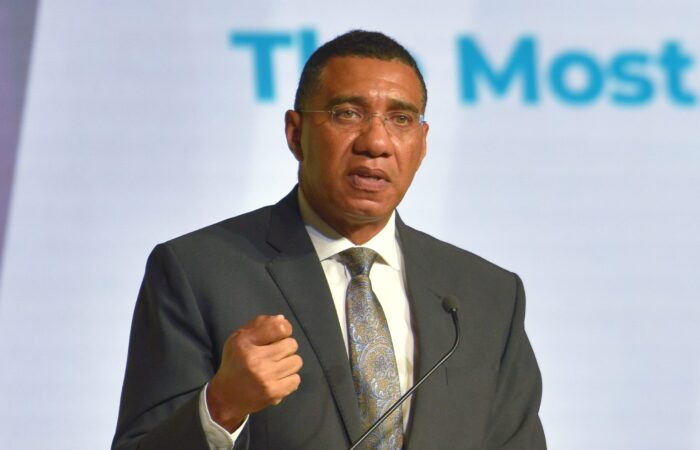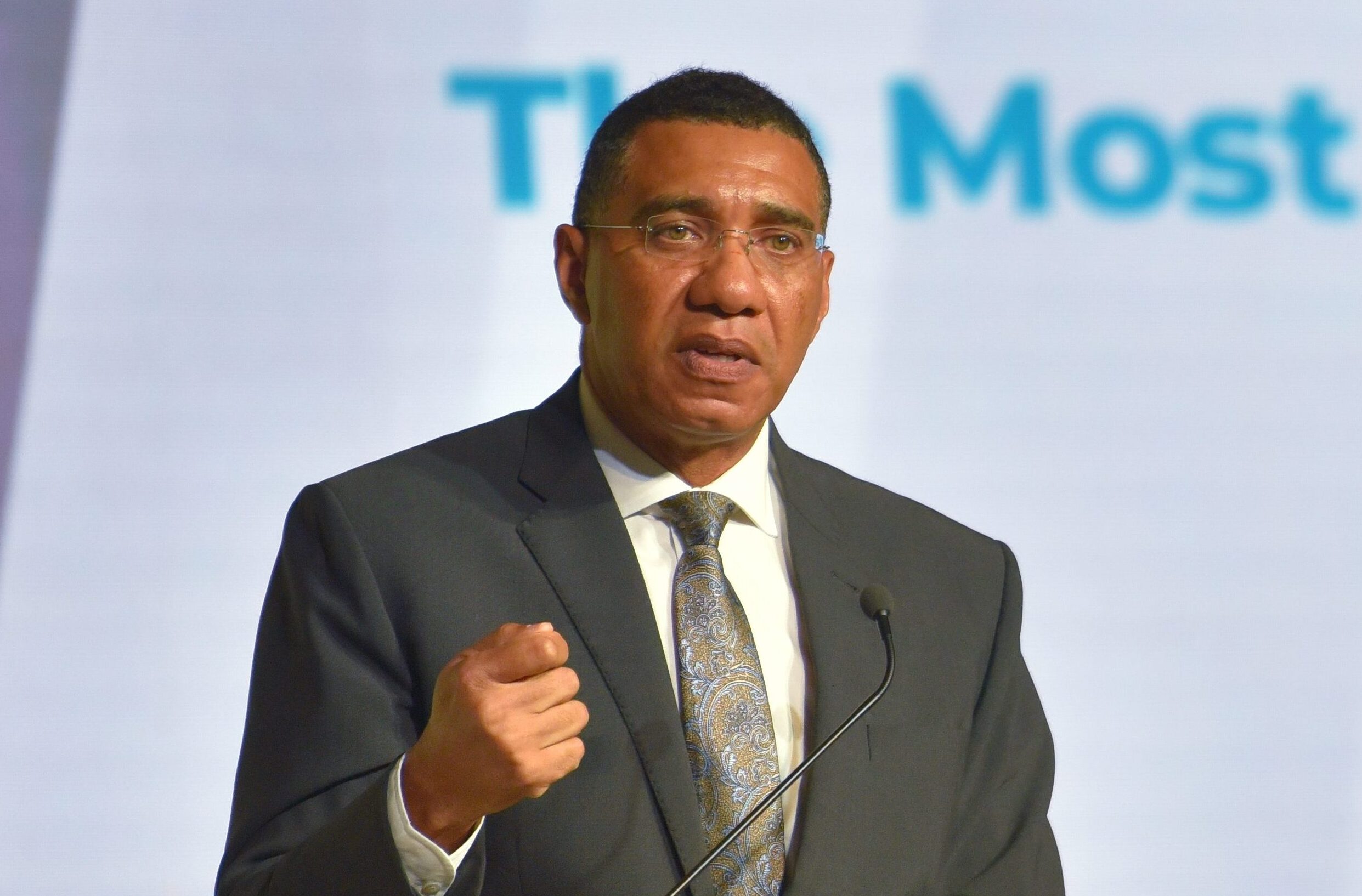

Andrew Holness has served as Jamaica’s prime minister since 2016, most recently recording a landslide re-election victory in 2020. First appointed in 2011 at the age of 39, he is the youngest person ever to hold the office, a distinction reflected in his vision for a country reimagined and reinvigorated. “Jamaica has an incred-ibly well-recognised brand globally for our music and culture. However, we want to be known as a destination for investment,” he explains.
To that end, Holness has set in mo-tion ambitious plans for economic development, targeting expansion in Jamaica’s traditional powerhouse sec-tors such as tourism, while nurturing growth in areas as varied as renewable energy and film production—all of it underpinned by an unwavering com-mitment to fiscal discipline.
Q: How does your administration symbolise a new chapter for Jamaica?
As the first prime minister born post-independence, I see myself as a bridge from the past into the future. My role ensures that what the founders of our nation struggled for is achieved, including the freedom and independence and the prosperity and dignity of our people. Jamaica has been doing this to ensure that we remain a strong and vibrant democracy where our people are free but also have a prosperous economy in which our people can thrive, and from a practical point of view, to reduce poverty, alienation, suffering and provide hope for our people.
My job as prime minister is to create an environment in which citizens and business enterprises can flourish and grow. We have been working hard to do so, and our mission is to make Jamaica the place of choice for people to live, work, invest, do business, raise their families and retire in paradise.
Q: What strategies have engineered Jamaica’s economic turnaround?
As a country, we came to an understanding that fiscal discipline was important for the development of the nation, and there was a social consensus built where we got civil society, businesses and external stakeholders—like the IMF and the unions—on board with the idea that we must reign in our national debt.
Since I was appointed prime minister in 2016, we have reduced the nation’s debt significantly. We are at 74% of GDP, and by the end of this fiscal year, it should be below 70%. This is a major achievement that has given us the space to make critical investments in infrastructure, health, education and energy. The government is pivoting to a new chapter that focuses on accelerating the conversion of this new fiscal space into capital projects.
We are focusing on the ease of doing business. One of the great advantages of the UAE is linked to its business-friendly attitude and speed of doing business, and Jamaica is working on becoming similar to that. We want to make Jamaica a place where the efficiency of doing business is its trademark, and the place of choice for investments.
Q: What are Jamaica’s priority investment sectors?
Jamaica’s infrastructure needs a massive infusion of investment in roads, buildings and ports. We are packaging the entire investment and infrastructure strategy through the public-private partnership (PPP) model to attract investment. Jamaica has been the most successful Caribbean country in utilising the PPP model after applying it to several major infrastructure projects, including toll road highway systems, energy and ports. We strongly encourage investments from the Middle East in this area.
Another area we are doing well in attracting interest is tourism, and we currently have 8,000 rooms being built, with the potential to be doubled. We have put in place a structure for integrated resort development, which includes casinos and hotels. We have a major investment coming called the Harmony Cove development, worth one billion dollars.
In the energy sector, 18% of our electricity generation is from renewables, and we have packaged another 200 megawatts for private investment, especially solar. Our objective is for 50% of our energy generation to come from renewables, and we welcome investments in this area. The cultural and creative industries are another area where we believe we have significant competitive advantages. We recently developed a film fund that will be used to open investment opportunities in the development of sound stages, studios, and the back-end investment in film. In addition, we have several ports across the country that are prime for development, especially for cruise ships.
Q: Which signature projects would you highlight to potential UAE partners?
A particular area we want to focus on is the development of new cities and urban areas. We are looking for investors who would be willing to develop small townships, urban spaces and new centres. Furthermore, there are opportunities to invest in the government campus in Jamaica. We have identified an area in Kingston appropriate for an urban renewal framework, involving the building of government infrastructure to house various ministries and create a new urban centre. We also have investments at the waterfront, with many blocks that need redevelopment.
Q: What principles guide your vision for Jamaica?
Being inclusive is an important part of my leadership style. However, we recognise that it is one thing to promise inclusion and another to deliver on it. When I say I see myself as a bridge between the past and the future, the bridge I am referring to is the economy, and the foundation of a strong economy is good fiscal management. Economic growth allows people to move with confidence into the future, which involves the security and internal peace of the nation.
We have put in place social programmes and investments in national security to deal with social issues, manage violence and protect the vulnerable and the weak. We recently launched a programme to review and reform our education system, and we will be building seven new public educational institutions at a secondary level that focus heavily on STEM. We are a service economy, but we need to produce a labour force that can regenerate the skills that we have.
The third area of focus is to get everyone employed. We believe the best welfare program is a job, and we want everyone who is willing to be employed. The last unemployment figure was at 3.6%, which opens other difficulties and challenges in the labour force.
Jamaica is rapidly becoming a place where people can come to work because the economy is expanding and new opportunities are emerging, but the problem they are facing is the level of skill. We need to transition to higher-value job propositions, which is why we are investing in STEM so we can supply the labour force for tech-related industries.